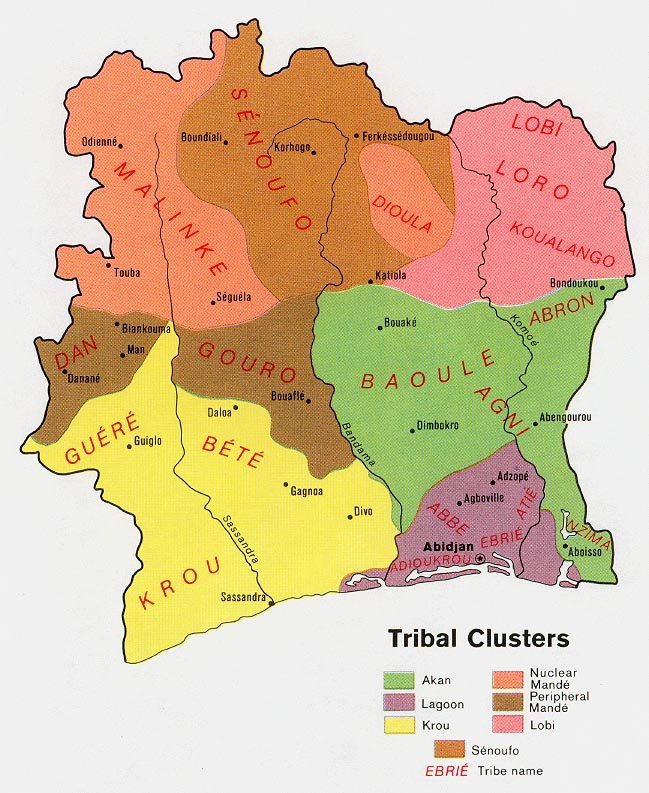
The Nwa Wan people are an ethnic group residing in the western regions of Cote d'Ivoire. They are part of the larger Kru language family, with their own distinct language and cultural traditions. The Nwa Wan have a long history in the region, shaped by migration, intermarriage, and interaction with neighboring peoples. Traditional leadership, such as village chiefs and councils of elders, has played a central role in maintaining order and preserving cultural identity. Despite the challenges of colonialism, civil conflict, and modernization, the Nwa Wan have maintained a strong sense of community and continuity with their ancestral roots.
The daily life of the Nwa Wan people centers around subsistence agriculture. Men and women work together to cultivate crops such as rice, yams, cassava, and plantains, which form the basis of their diet. Meals typically consist of fufu or rice, served with vegetable sauces, fish, or meat when available. Cocoa and coffee are also grown as cash crops, providing income for many families. Livestock such as goats and chickens are kept for food and trade. They highly value family life, with extended families often living in close proximity and sharing responsibilities. Elders are respected for their wisdom and play a key role in decision-making and the transmission of cultural values.
Celebrations and communal gatherings are important aspects of Nwa Wan culture. Festivals often coincide with the agricultural calendar, such as planting and harvest times, and are marked by traditional music, dance, and storytelling. Weddings and rites of passage are significant events, bringing together families and strengthening social bonds.
The Nwa Wan people are primarily animistic, with traditional beliefs centered on the veneration of ancestors and the spiritual world. Many believe that spirits of the ancestors influence daily life and well-being, and rituals are performed to honor and appease these spirits. Sacred sites, such as certain trees or rivers, are often associated with spiritual power. While some Nwa Wan have been exposed to Christianity or Islam through missionary activity and migration, traditional religious practices remain deeply rooted in the community. The gospel of Jesus Christ is not adequately known among the Nwa Wan, and most continue to rely on ancestral customs and rituals for guidance and protection.
Nwa Wan communities face significant challenges related to poverty, limited access to healthcare, and educational opportunities. Many families experience food insecurity, especially during periods of drought or poor harvest. Access to clean water and adequate sanitation is often lacking, leading to health concerns. Spiritually, the Nwa Wan remain largely unreached by the gospel, with few resources available in their language and little exposure to the hope found in Jesus Christ. There is a need for holistic development that addresses both physical well-being and spiritual transformation.
Pray for the physical needs of the Nwa Wan people, asking God to provide for their daily sustenance, improve access to clean water, and bring relief from poverty and disease.
Lift up the children and youth, that they would have opportunities for education and a brighter future.
Intercede for the spiritual awakening of the Nwa Wan, that the Holy Spirit would prepare hearts to receive the gospel and that workers would be sent to share the love of Jesus Christ in ways that are meaningful and respectful.
Pray for peace, unity, and hope among the Nwa Wan, and that God's blessing would be evident in their families and communities.
Scripture Prayers for the Wan, Nwa in Côte d'Ivoire.
https://www.peoplegroups.org/explore/GroupDetails.aspx?peid=15113#topmenu
https://en.wikipedia.org/wiki/Kru_people
| Profile Source: Joshua Project |